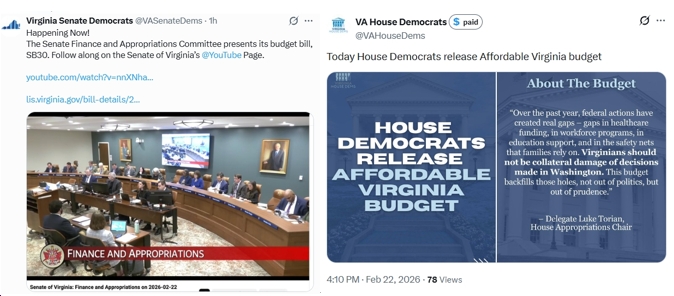
RICHMOND, V.A. — Today, the Senate of Virginia advanced Senate Bill 30 (SB 30), a biennium budget bringing investments in education, healthcare, housing, and workforce development. Senate Bill 30 (SB 30) passed the Senate with a bipartisan vote of 24-16. Going into this session, Virginia Senate Democrats promised Virginians they would focus on a budget and legislation that emphasized affordability. With this budget and legislation, the Senate Democrats have delivered.
The Virginia Senate Democratic Caucus stated, “At a time when federal actions threaten Medicaid coverage and drive up health insurance costs, Virginia is stepping up. We are protecting coverage, stabilizing the individual market, restoring access to healthcare, and strengthening public health, all without cutting core services or shifting the burden onto working families.This is a budget grounded in fairness and fiscal responsibility. It raises wages, expands paid family and medical leave, invests in opportunity, and ensures that industries benefiting from Virginia’s growth contribute to its future. On day one of this legislative session, we promised that affordability would be at the forefront of our work, and we have not wavered. We are making good on that promise. Virginians deserve to see it in their paychecks, feel it in their healthcare costs, and experience it in stronger schools and communities across the Commonwealth.”
The Senate of Virginia has passed a robust budget with key investments in:
Workforce and Wages: Higher Pay and Paid Leave for Working Virginians
The Senate advanced legislation to raise Virginia’s minimum wage to $15 per hour and paid family and medical leave. For thousands of Virginia families, this means financial stability during life’s most critical moments. SB 30 also invests directly in public workers:
3% salary increases each year for state employees
2% salary increases for state-supported local employees
$560 million in workforce investment over the biennium
$243 million in General Fund support for employee health insurance premiums
Food Access: Safeguarding SNAP & Expanding School Meals
In response to federal funding changes, SB 30 proactively protects food assistance programs:
$135 million set aside in anticipation of SNAP cost-sharing requirements
$100.4 million to address increased administrative cost shares
$2 million for SNAP vendor support
$2.4 million for a SNAP quality assurance team
Childcare: Expanding Access and Supporting Working Parents
The Senate establishes a $50 million biennial early childhood childcare pilot program that partners with employers and higher education institutions to expand access. This targeted investment directly addresses one of the largest affordability challenges facing Virginia families.
The program will:
Affordable Housing: Investing in Affordable Communities
These investments promote mixed-income housing development while strengthening local economic infrastructure. SB 30 strengthens housing affordability through:
$50 million in additional funding for the Virginia Housing Trust Fund
$13 million for eviction prevention and diversion programs
Nearly $80 million redirected to provide grants directly to local governments for site development
Healthcare: Protecting Medicaid and Stabilizing Coverage
With potential federal Medicaid reductions and the expiration of enhanced Affordable Care Act premium tax credits, healthcare affordability faces significant uncertainty. SB 30 addresses a projected $3.2 billion Medicaid forecast challenge, without cutting eligibility or shifting costs onto working families.
Healthcare investments include:
Provides $200 million to offset the expiration of enhanced federal premium tax credits and stabilize the individual insurance market
Establishes a $90 million Medicaid reserve
Restores the FAMIS prenatal program
$136.1 million for the Children’s Services Act
$44.3 million to increase Medicaid personal care rates
$22.5 million for developmental disability waiver rate increases
$10 million for free clinic
From raising the minimum wage to $15, to establishing paid family and medical leave, from restoring prenatal healthcare coverage to expanding school funding and childcare access, the Virginia Senate has advanced a comprehensive affordability agenda. This budget protects working families, strengthens public education and healthcare, invests in housing and transportation, and ensures powerful corporate interests contribute to the Commonwealth’s future.





![Thursday News: “Europe draws red line on Greenland after a year of trying to pacify Trump”; “ICE Agent Kills Woman, DHS Tells Obvious, Insane Lies About It”; “Trump’s DOJ sued Virginia. Our attorney general surrendered”; “Political domino effect hits Alexandria as Sen. Ebbin [to resign] to join Spanberger administration”](https://bluevirginia.us/wp-content/uploads/2026/01/montage010826.jpg)