by Joanne O’Connor, Bridge2Blue
As inflation rises and costs are weighing down everyday Virginians, it seems like ages ago when President Biden and a Democratic Congress passed the Inflation Reduction Act of 2022, aimed at helping Americans and stabilizing the economy. And while Democrats were working to make things better, the Republicans’ radical Project 2025 emerged as the playbook of exploitation for another Trump administration.
Project 2025, the work of the Heritage Foundation and other far-right organizations, is the “how to” manual for establishing an authoritarian government and exerting unprecedented control over our lives. The plan would restructure or dismantle every federal agency, provide substantial tax cuts to the wealthiest 1%, and require federal employees to pledge loyalty to Trump, not the Constitution. The architects of Project 2025 call it “A Promise to America.” I call it a betrayal of the American people.
While the damage across the board is significant, when it comes to public education specifically, Project 2025 has serious, adverse implications – diverting funds from public schools, jeopardizing equitable access for all students, and potentially undermining academic achievement. However, amidst these challenges, some states and public schools are modeling ways to counteract federal cuts, help kids and their families and maintain high-quality education.
The One Big Beautiful Bill Act (OBBBA) – Windfall for the Wealthy
After the start of his second term, Trump and his allies in Congress got to work implementing Project 2025. In early 2025, thousands of government employees were abruptly laid off—the first hint of the dismantling to come. Trump and the Republicans illegally rolled back the Biden era corporate minimum tax, stripped funding from social and environmental programs, and grossly expanded defense and immigration enforcement spending—all while promising prosperity for the middle class.
To implement his agenda and redirect federal funding, Trump signed the misnamed One Big Beautiful Bill Act (OBBBA) on July 4, 2025 —- a sweeping law that cut billions from public programs, including healthcare, and disproportionately benefits the wealthiest one-fifth of Americans. As a result of the OBBA and other Republican policies, costs are going up, not down as promised. The OBBA may be the only law Trump has no interest in breaking.
Republican Education Policy Focus – Weaken Public Education
One of the largest OBBA funding shifts is a federal program under the Educational Choice for Children Act (ECCA) that would divert billions each year from public education to fund school vouchers for private K-12 schools—advancing a core goal of Project 2025: weaken public education and abolish the Department of Education.
According to the National Education Association (NEA), the ECCA and school voucher programs broadly deplete crucial funding for public schools and undermine their ability to deliver quality education for all students. Research shows that vouchers do not improve academic outcomes, often allow schools to discriminate against students, and disproportionately benefit families who already send their children to private schools. Several studies also suggest that voucher programs can lead to lower academic achievement. Moreover, expanding vouchers can flood the private school market with pop-up for-profit education providers, many of which close quickly and drive up tuition costs.
Overcoming Republican Vote to Defund Schools: A Path Forward
In Virginia, all five Republican Representatives – Rob Wittman (VA01), Jennifer Kiggans (VA02), John McGuire (VA05), Ben Cline (VA06) and Morgan Griffith (VA09) – voted to defund public education as part of the OBBA. Pairing those cuts with the ECCA, these moves prioritize privatization over equitable public schooling and justify handing it over to private profiteers. Without federal oversight, admission policies would be left to these entities, potentially leaving millions of students—particularly those with learning challenges—behind.
Fortunately, all is not lost. A quiet transformation is improving schools. Teachers and state education agencies in Virginia and across the country are developing “community school” models that combine academics with community services to help meet the needs of students and their families. This approach to education helps keep kids healthy and in school by offering on-site medical, mental health, and social services. Where implemented, these schools are seeing less chronic absenteeism, fewer suspensions, higher graduation rates, and improvements in math and English language arts. Some California teachers are making community school expansion a key demand in contract negotiations.
Prior to OBBA, the Federal Government’s Full Service Community Schools (FSCS) program provided modest funding grants to these schools. However, despite their success, the Trump administration has attempted to eliminate these programs by zeroing out FSCS funding in the 2026 education budget.
New Approach to Public Education in the Wave of Federal Cuts
Although the ECCA is a federal voucher program that requires states to opt-in, states like Virginia are pursuing ways to strengthen public education locally. With FSCS funding, the Virginia Department of Education (VDOE) has created a Virginia community school model built on family-school- community partnerships to deliver integrated wraparound services. As of February 2026, over 50 sites across 13 school divisions have earned the official state designation.
Community schools are solid investments that research finds that for every $1 invested the community benefits up to $15 in returns. These models increase learning time and achievement by reducing disciplinary incidents and chronic absenteeism.
The Trump administration’s cuts to federal funding and push for voucher programs threaten the integrity of our public education system, risking wider disparities and jeopardizing students’ futures. However, states like Virginia are taking a stand. By prioritizing Designated Community Schools, Virginia is countering federal cuts and integrating essential community services to meet students’ diverse needs. This approach not only improves family health and reduces absenteeism but also boosts academic performance. Despite federal funding challenges, community schools shine as a beacon of hope and resilience in public education.
Designated Public Community Schools by Region
Several school divisions with schools that have received the official Virginia Community Schools Designation for their high-quality wraparound service models:
- Central Virginia
- Petersburg City Public Schools: All 9 schools in the division are designated, including Petersburg High School, Vernon Johns Middle, and Cool Spring Elementary.
- Henrico County Public Schools: Includes R. Tucker High School, Quioccasin Middle, and the Oak Avenue Complex, which serves as a dedicated “Community Hub” for coordinated support.
- Southwest & Western Virginia
- Washington County Public Schools: 14 schools are designated, including Abingdon Elementary, Damascus Middle, and John S. Battle High School.
- Grayson County Public Schools: Includes Fairview Elementary, Independence Middle, and Grayson County High School.
- Carroll County Public Schools: Designated sites include Carroll County High, Hillsville Elementary, and St. Paul School.
- Northern Virginia
- Arlington Public Schools: Provides school-based behavioral health clinicians at sites like Kenmore Middle, Wakefield High, and the Arlington Career Center.
- Fairfax County Public Schools: Partners with the county for the Beyond the Bell pilot at elementary sites such as Annandale Terrace and Mount Vernon Woods to provide enhanced neighborhood services.
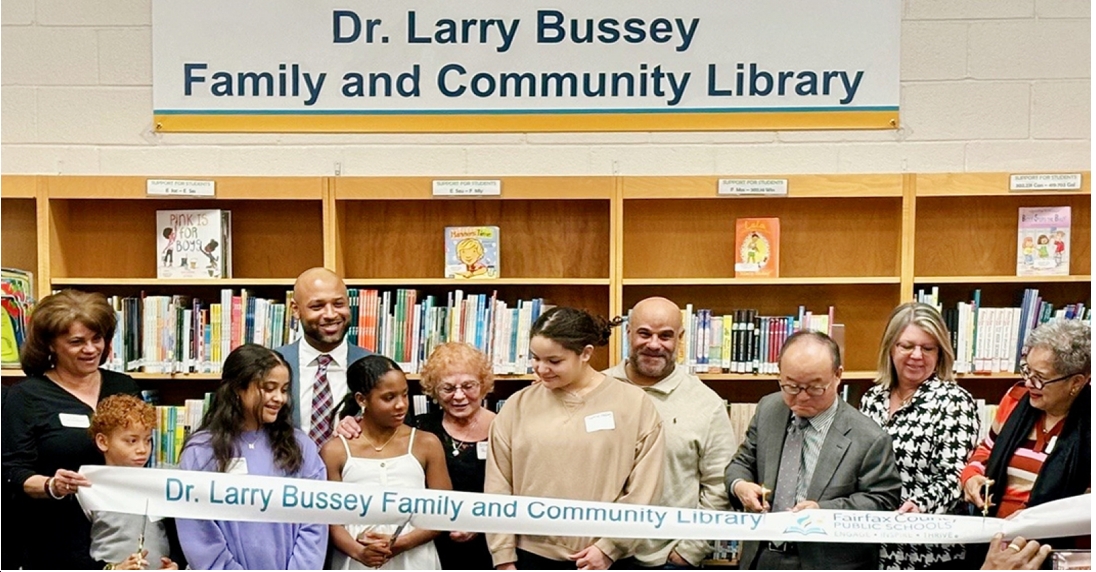
Photo by Fairfax County Public Schools