From the VA Senate Democratic Caucus:
Virginia Senate Democratic Caucus Delivers on Affordability Legislation as Governor Signs Key Bills into Law
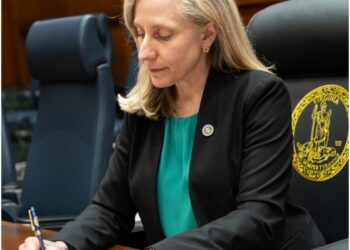
RICHMOND, V.A., —- Yesterday at 11:59 PM was the deadline for Governor Abigail Spanberger to take final action on legislation passed during the 2026 session of the Virginia General Assembly. With the governor’s signature, the Virginia Senate Democratic Caucus is proud to announce the passage of its affordability legislation. Senate Democrats delivering on promises made to Virginians at the start of the legislative session and during the campaign cycle.
With a Democratic majority in the General Assembly and a Democratic governor, Senate Democrats are committed to working together to lower costs, strengthen the workforce, and support working families. Today’s bill signings reflect that commitment in action.
The Virginia Senate Democratic Caucus released the following statement:
“From the very beginning of this session, and long before that on the campaign trail, Senate Democrats made a clear promise: we would take on the rising cost of living and deliver real relief for Virginia families. Yesterday, with Governor Abigail Spanberger’s signature, we followed through on that promise in a meaningful way.
We didn’t approach affordability with slack. We raised the minimum wage to $15 an hour so hard work pays more. We capped out-of-pocket prescription drug costs, so families aren’t forced to ration the care they need. We expanded access to childcare through employer-supported programs, helping working parents stay in the workforce and support their families. And we advanced a strong package of housing legislation to increase supply, modernize zoning, and make it easier for Virginians to find a place they can afford to call home.
With a Democratic majority in the Virginia General Assembly working alongside a Democratic governor, we proved that when leaders are aligned and focused, we can deliver real results, not just talk about them. This is what governing looks like when you put people first.”
The priority affordability legislation signed into law includes:
Workforce Development and Wages:
Senate Bill 1 (SB 1): Raises minimum wage to $15 per hour.
Senate Bill 25 (SB 25): This bill directs the Virginia Department of Energy to help build the workforce needed for Virginia’s offshore wind industry. It requires the agency to identify and develop training programs and resources that prepare workers for jobs in offshore wind.
Senate Bill 121 (SB 121): Eliminates the exemption from Virginia’s minimum wage requirements for persons employed as farm laborers or farm employees.
Senate Bill 433 (SB 433): This bill says that if workers are locked out by their employer during a labor dispute, they can still qualify for unemployment benefits.
Senate Bill 759 (SB 759): This bill increases how much money someone can receive each week in unemployment benefits. Eligible workers would receive $48 more per week than the current benefit amount.
Affordable and Accessible Healthcare:
Senate Bill 161 (SB 161): This bill requires health insurance companies that sell plans to individuals and small businesses to make sure some of their plans limit how much patients have to pay out-of-pocket for prescription drugs.
Senate Bill 257 (SB 257) : Expands access to healthcare services to help ensure Virginians can receive timely and affordable care.
Senate Bill 669 (SB 669) : Increases transparency and oversight of pharmacy benefits managers to reduce hidden fees that drive up prescription drug costs.
Senate Bill 745 (SB 745): This bill prohibits health insurance carriers from restricting doctors from referring patients or lab tests to any in-network clinical laboratory or pathology service provider.
Childcare and Education:
Senate Bill 3 (SB3): Creates the Employee Child Care Assistance Program, which matches employer contributions to help working families afford childcare.
Senate Bill 33 (SB 33): Supports improvements to Virginia’s public education system to strengthen opportunities for students and families.
Senate Bill 134 (SB 134): This bill requires the Virginia Department of Education to create a way to estimate how much funding is needed for early childhood care and education.
Lowering Energy Costs:
Senate Bill 5 (SB 5) : Advances policies to support clean energy development and implement resources to more effectively deliver energy-efficient housing.
Senate Bill 175 (SB 175): This bill amends the renewable energy portfolio standard (REPS) program requirements for Dominion Energy Virginia, specifically focusing on how much of their energy mix must come from renewable sources like solar, wind, or anaerobic digestion.
Senate Bill 327 (SB 327): Supports the expansion of renewable energy infrastructure to help meet Virginia’s growing energy demands while reducing long-term costs.
Senate Bill 340 (SB 340): Encourages renewable energy development on farmland through agrivoltaics, allowing agriculture and solar energy production to coexist.
Senate Bill 423 (SB 423): Advances policies that promote clean energy innovation and support the development of renewable energy projects across the Commonwealth.
Senate Bills 553 (SB 553): This bill requires water users that provide water to data centers, specifically those with an air permit issued by the Department of Environmental Quality (DEQ), to report certain data on water usage to the State Water Control Board.
Senate Bill 598 (SB 598): This bill changes buyers are typically large-scale purchasers of renewable energy, such as businesses or organizations that commit to buying clean energy to meet their sustainability goals.
Senate Bill 621 (SB 621): Strengthens energy planning and grid reliability to ensure Virginia’s energy system can meet future demand while keeping costs stable.
Senate Bill 650 (SB 650): This bill allows public utilities engaged in water or sewerage services to propose discounted rates for low-income customers.
Senate Bill 802 (SB 802): Encourages continued investment in renewable energy generation and infrastructure to support Virginia’s clean energy economy.
Senate Bill 823 (SB 823): This bill authorizes the Board for Contractors to require specific contract provisions and disclosures for agreements related to the sale, lease, or power purchase of residential solar energy systems.
Affordable Housing:
Senate Bill 48 (SB 48): This bill changes the Virginia Residential Landlord and Tenant Act to give landlords rules for handling tenants who don’t follow their rental agreement.
Senate Bill 74 (SB 74): This bill lets local governments in Virginia provide affordable housing by changing their zoning rules.
Senate Bill 273 (SB 273): Expands access to the Eviction Diversion Program and ensures tenants are informed of available resources before eviction proceedings move forward.
Senate Bill 290 (SB 290): Allows local governments to take legal action when landlords fail to address serious health and safety hazards in rental properties.
Senate Bill 294 (SB 294): This bill updates the Virginia Residential Landlord and Tenant Act to protect tenants when utilities are sub metered or billed through ratio utility billing systems.
Senate Bill 313 (SB 313): This bill stops landlords in Virginia from charging tenants extra fees just for paying rent or other amounts on a regular schedule (like monthly).
Senate Bill 325 (SB 325): Allows military service members greater flexibility to terminate housing leases when relocating due to service obligations.
Senate Bill 328 (SB 328): This bill removes the caps on local grants that help local employees buy homes or access workforce housing.
Senate Bill 346 (SB 346): Expands where manufactured housing can be placed by allowing it in zoning districts where site-built homes are permitted.
Senate Bill 373 (SB 373): Strengthens tenant defenses in eviction cases when landlords fail to comply with housing laws.
Senate Bill 628 (SB 628): This bill creates the Eviction Reduction Program. The program’s goals are to promote housing stability for renters, identify why evictions happen, provide support and interventions to prevent or reduce evictions.
In addition to the legislation signed into law, several bills passed by the Virginia General Assembly were returned by Governor Abigail Spanberger with recommended amendments.
Next Steps
The Virginia General Assembly will return to Richmond on Wednesday, April 22, 2026, for the Reconvene Session to consider the governor’s amendments and vetoes.
###