With the conclusion of the 2026 Virginia General Assembly, which adjourned sine die a bit earlier this evening, see below for press releases from the Senate and House Democrats on their accomplishments this session, including sending nearly 700 bills – on pretty much every topic, from healthcare to economic security to energy, education, housing, guns, cannabis, “skill games,” reproductie freedom (including contraception), etc, etc. – to Gov. Abigail Spanberger. The main item outstanding, of course, is a new budget, but presumably that will be hashed out over the next few weeks, with the “Reconvened Session” scheduled for April 22 (the last day for Gov. Spanberger’s action on legislation is April 13). Now, personally, I’m mostly happy with this session, but I would have liked to have seen some serious work towards making Virginia’s regressive tax code a lot more progressive (e.g., higher income tax rates on the wealthy); towards real campaign finance reform (I know, I know, dream on!); towards making the Virignia Clean Economy Act a *lot* more aggressive, particularly on energy efficiency; etc. But clearly, Democrats decided they were NOT going to raise taxes, for whatever reasons – and no, I don’t think that will convince right wingers that Democrats aren’t “commies” or whatever lies and lunacy they believe – at least this session. The problem is, as the Trump administration hurts Virginia’s economy and its social safety net (e.g., Medicaid), we’re going to need to figure out how to pay for some of that stuff ourselves, and money doesn’t grow on trees, last I checked, so…
Anyway, with that, here are the statements from VA House and Senate Democrats.
Virginia Senate Democratic Caucus Celebrates Passage of Robust Affordability Agenda as General Assembly Adjourns Sine Die
RICHMOND, V.A. – Today, the Virginia General Assembly adjourned sine die, marking the conclusion of the 2026 legislative session. Throughout the 60-day session, Virginia Senate Democrats remained steadfast and focused on lowering costs and strengthening economic security for families across the Commonwealth. From expanding housing opportunities to protecting consumers and supporting working families, Virginia Senate Democrats prioritized policies designed to make everyday life more affordable for Virginians.
The Virginia Senate Democratic Caucus released the following statement:
“As the 60-day legislative session wraps up, the Virginia Senate Democratic Caucus is proud to celebrate a bold, commonsense package of legislation that focuses on jobs, workforce stability, energy and utilities costs, and affordability. This year, we delivered real solutions for real Virginians facing rising costs. We raised the minimum wage to $15 an hour, ensured farm workers are paid fairly, and protected hard-earned paychecks from excessive garnishment. We also created a statewide paid family and medical leave program, giving workers up to 12 weeks of paid leave to care for themselves or their loved ones. On housing, we took meaningful steps to expand options and protect tenants, modernizing zoning laws to allow more affordable homes, and implementing stronger tenant protections to reduce upfront fees and make security deposits and utility charges easier to understand. We also tackled the high cost of prescription drugs by capping out-of-pocket expenses for many health insurance plans, giving families one less thing to worry about. Through these policies, Virginia Senate Democrats are making Virginia more affordable, fairer, and stronger. We’re putting working families first, strengthening the workforce, and building a future that Virginians can truly be proud of.”
Key affordability legislation headed to Governor Abigail Spanberger’s desk for final nod of approval include:
Workforce Development and Wages:
Senate Bill 1 (SB 1): Raises minimum wage to $15 per hour.
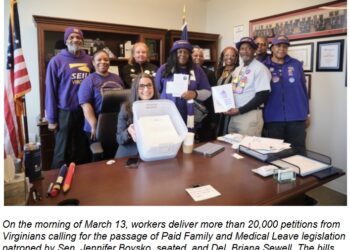
Senate Bill 2 (SB 2): This bill creates a statewide paid family and medical leave program in Virginia. Workers could receive paid time off when they need leave for things like caring for a family member, recovering from a serious illness, or welcoming a new child.
Senate Bill 25 (SB 25): This bill directs the Virginia Department of Energy to help build the workforce needed for Virginia’s offshore wind industry. It requires the agency to identify and develop training programs and resources that prepare workers for jobs in offshore wind.
Senate Bill 28 (SB 28): This bill makes sure domestic workers, like house cleaners, nannies, and home caregivers, are covered by Virginia’s overtime pay laws. That means they would be entitled to overtime pay when they work more than the standard number of hours in a week.
Senate Bill 121 (SB 121): Eliminates the exemption from Virginia’s minimum wage requirements for persons employed as farm laborers or farm employees.
Senate Bill 199 (SB 199): This bill requires most employers in Virginia to provide paid sick leave to their employees. Workers would earn 1 hour of paid sick leave for every 30 hours worked.
Senate Bill 378 (SB 378): Extends collective bargaining rights for the first time to many public sector workers, allowing them the opportunity to negotiate better wages, hours, and other employment conditions.
Senate Bill 433 (SB 433): This bill says that if workers are locked out by their employer during a labor dispute, they can still qualify for unemployment benefits.
Senate Bill 597 (SB 597) : Protects workers paycheck by limiting treasure’s liens to no more than 25% of disposable earnings per pay period.
Senate Bill 644 (SB 644): This bill strengthens workers’ ability to hold employers accountable for wage violations.
Senate Bill 759 (SB 759): This bill increases how much money someone can receive each week in unemployment benefits. Eligible workers would receive $48 more per week than the current benefit amount.
Affordable and Accessible Healthcare:
Senate Bill 161 (SB 161): This bill requires health insurance companies that sell plans to individuals and small businesses to make sure some of their plans limit how much patients have to pay out-of-pocket for prescription drugs.
Senate Bill 229 (SB 229): This bill allows groups of consumers to file class action lawsuits when their rights under the Virginia Consumer Protection Act are violated.
Senate Bill 257 (SB257) : Expands access to healthcare services to help ensure Virginians can receive timely and affordable care.
Senate Bill 271 (SB 271): This bill establishes the Prescription Drug Affordability Board (the Board), aimed at addressing the high costs of prescription drugs. Its primary purpose is to protect citizens and other stakeholders within the healthcare system from excessively expensive drug prices.
Senate Bill 669 (SB 669) : Increases transparency and oversight of pharmacy benefits managers to reduce hidden fees that drive up prescription drug costs.
Senate Bill 745 (SB 745): This bill prohibits health insurance carriers from restricting doctors from referring patients or lab tests to any in-network clinical laboratory or pathology service provider.
Childcare and Education:
Senate Bill 3 (SB3): Creates the Employee Child Care Assistance Program, which matches employer contributions to help working families afford childcare.
Senate Bill 33 (SB 33): Supports improvements to Virginia’s public education system to strengthen opportunities for students and families.
Senate Bill 134 (SB 134): This bill requires the Virginia Department of Education to create a way to estimate how much funding is needed for early childhood care and education.
Lowering Energy Costs:
Senate Bill 5 (SB 5) : Advances policies to support clean energy development and improve long-term.
Senate Bill 72 (SB 72): Expands access to clean energy resources and strengthens Virginia’s transition to a more reliable and affordable energy grid.
Senate Bill 175 (SB 175): This bill amends the renewable energy portfolio standard (REPS) program requirements for Dominion Energy Virginia, specifically focusing on how much of their energy mix must come from renewable sources like solar, wind, or anaerobic digestion.
Senate Bill 225 (SB 225): This bill establishes the Virginia Clean Energy Innovation Bank, a new entity designed to finance clean energy projects and initiatives aimed at reducing greenhouse gas emissions.
Senate Bill 229 (SB 229): Creates Class Action Lawsuits, extending Virginians a consumer protection tool that can allow tenants, consumers, prisoners, and others to band together to fight collectively for their rights, instead of individuals having to exhaust their savings arguing separate lawsuits.
Senate Bill 250 (SB 250): Expands eligibility for balcony solar kits: small, plug‑in solar devices—simple systems under 1,200 watts that anyone can set up by plugging them into a standard outlet.
Senate Bill 253 (SB 253): This bill amends the annual funding commitments for a pilot program designed to provide energy assistance and weatherization services to low-income, elderly, and disabled individuals.
Senate Bill 294 (SB 294): This bill amends the Virginia Residential Landlord and Tenant Act to include provisions related to tenant records and submetering, energy allocation, and ratio utility billing systems.
Senate Bill 327 (SB 327): Supports the expansion of renewable energy infrastructure to help meet Virginia’s growing energy demands while reducing long-term costs.
Senate Bill 340 (SB 340): Encourages renewable energy development on farmland through agrivoltaics, allowing agriculture and solar energy production to coexist.
Senate Bill 423 (SB 423): Advances policies that promote clean energy innovation and support the development of renewable energy projects across the Commonwealth.
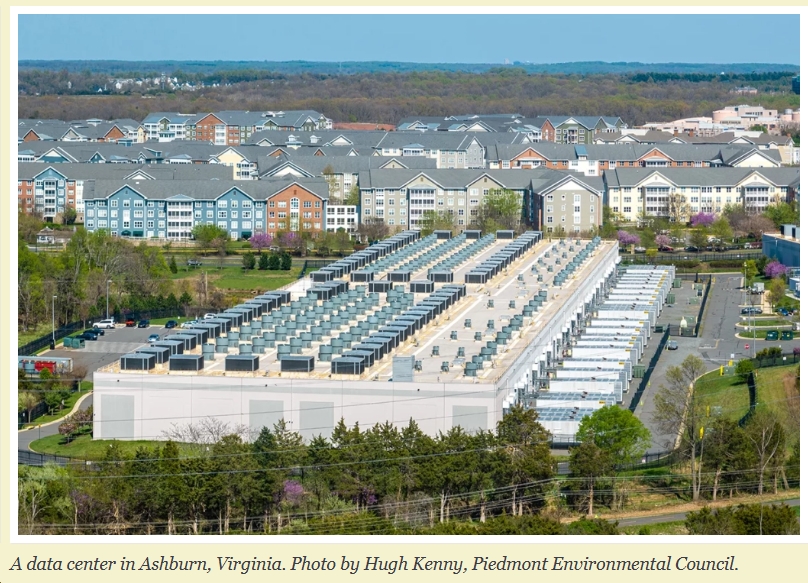
Senate Bills 553 (SB 553): This bill requires water users that provide water to data centers, specifically those with an air permit issued by the Department of Environmental Quality (DEQ), to report certain data on water usage to the State Water Control Board.
Senate Bill 598 (SB 598): This bill changes buyers are typically large-scale purchasers of renewable energy, such as businesses or organizations that commit to buying clean energy to meet their sustainability goals.
Senate Bill 621 (SB 621): Strengthens energy planning and grid reliability to ensure Virginia’s energy system can meet future demand while keeping costs stable.
Senate Bill 650 (SB 650): This bill allows public utilities engaged in water or sewerage services to propose discounted rates for low-income customers.
Senate Bill 802 (SB 802): Encourages continued investment in renewable energy generation and infrastructure to support Virginia’s clean energy economy.
Senate Bill 823 (SB 823): This bill authorizes the Board for Contractors to require specific contract provisions and disclosures for agreements related to the sale, lease, or power purchase of residential solar energy systems.
Affordable Housing:
Senate Bill 48 (SB 48): This bill changes the Virginia Residential Landlord and Tenant Act to give landlords rules for handling tenants who don’t follow their rental agreement.
Senate Bill 74 (SB 74): This bill lets local governments in Virginia create programs to provide affordable housing by changing their zoning rules.
Senate Bill 181 (SB 181): Creates local tax incentives to encourage converting underutilized buildings into residential housing.
Senate Bill 273 (SB 273): Expands access to the Eviction Diversion Program and ensures tenants are informed of available resources before eviction proceedings move forward.
Senate Bill 290 (SB 290): Allows local governments to take legal action when landlords fail to address serious health and safety hazards in rental properties.
Senate Bill 294 (SB 294): This bill updates the Virginia Residential Landlord and Tenant Act to protect tenants when utilities are submetered or billed through ratio utility billing systems.
Senate Bill 313 (SB 313): This bill stops landlords in Virginia from charging tenants extra fees just for paying rent or other amounts on a regular schedule (like monthly).
Senate Bill 325 (SB 325): Allows military service members greater flexibility to terminate housing leases when relocating due to service obligations.
Senate Bill 328 (SB 328): This bill removes the caps on local grants that help local employees buy homes or access workforce housing.
Senate Bill 346 (SB 346): Expands where manufactured housing can be placed by allowing it in zoning districts where site-built homes are permitted.
Senate Bill 373 (SB 373): Strengthens tenant defenses in eviction cases when landlords fail to comply with housing laws.
Senate Bill 388 (SB 388): This bill makes it easier for religious and certain nonprofit organizations to build housing on their tax-exempt land.
Senate Bill 490 (SB 490): This bill directs the Virginia Department of Housing and Community Development, working with the Virginia Housing Development Authority, to start a two-year pilot program that provides loans for building mixed-income housing
Senate Bill 628 (SB 628): This bill creates the Eviction Reduction Program. The program’s goals are to promote housing stability for renters, identify why evictions happen, provide support and interventions to prevent or reduce evictions.
Next Steps
Governor Abigail Spanberger has until Monday, April 13, 2026 to take final action on legislation passed during the session. Members of the Virginia General Assembly will return to Wednesday, April 22, 2026 for the Reconvene Session to consider the governor’s amendments and vetoes.
###
At Sine Die, Virginia House Democrats Deliver on Affordability
Virginia House Democrats Will Send Over 695 Bills to Governor Spanberger
RICHMOND, VA – This afternoon, Virginia House Democrats gaveled out of the 2026 legislative session and proudly passed over 695 bills. House Democrats delivered on building a more Affordable Virginia by lowering the cost of housing, energy, medicine, and childcare.
“Virginians elected the largest Democratic majority in decades because they knew we would deliver on our promise to lower costs for Virginia families – and we’ve done that,” said Speaker Scott. “Virginians will be spending less on their rent, utility bills, health care, and child care because of legislation we passed this session.”
“We’ve listened to Virginians and worked hard to pass bills that will drive the economy forward and allow Virginians to thrive,” said Leader Herring. “We came here to represent every corner of the Commonwealth, and we are going home having accomplished that.”
“Our top priority this session was affordability,” said Chair Tran. “We are proud of the legislation that we sent to the Governor that will cut costs for working families and strengthen our communities.”
Highlighted legislation passed by House Democrats
Top priorities:
- HB1 (Ward) – Minimum wage; increases incrementally to $15.00 per hour by January 1, 2028.
- HB2 (Sickles) – Electric utilities; energy efficiency upgrades, report.
- HB3 (LeVere Bolling) – Income-Qualified Energy Efficiency and Weatherization Task Force; established, definitions, report.
- HB4 (Bennett-Parker) – Affordable housing; preservation, definitions, civil penalty.
- HB5 (Convirs-Fowler) – Employment; Paid sick leave, civil penalty.
- HB6 (Price) – Contraception; establishes right to obtain, applicability, enforcement.
Child care
- HB18 (McClure) – Employee Child Care Assistance Pilot Program; established, report.
- HB211 (Gardner) – Head start, etc., Head Start State Collaboration Office to develop for endorsement a report, etc.
- HB1208 (Sewell) – Public education; early childhood care and education; child care access calculation; report.
Energy & Utilities
- HB397 (Herring) – Clean energy and community flood preparedness; market-based trading program.
- HB422 (Cole, N.) – Water utilities; reopening rate case in certain instances.
- HB434 (Levere Bolling) – Electric utilities; electric grid utilization metrics; State Corporation Commission.
- HB770 (Herring) – Public utilities; water and sewerage companies; discounted rates for low-income customers.
- HB1062 (Hernandez) – Electric utilities; pilot program for electric energy conservation, generation, and storage.
Healthcare
- HB483 (Delaney) – Prescription Drug Affordability Board established; drug cost affordability review.
- HB484 (Shin) – Health insurance; ethics and fairness in carrier business practices; downcoded claims.
- HB618 (Shin) – Health insurance; reporting requirements.
- HB625 (Henson) – Health insurance; limit on cost-sharing payments for prescription drugs under certain plans.
- HB676 (Maldonado) – Health insurance; carrier business practices; electronic attachments.
- HB701 (Maldonado) – Health insurance; notice of adverse determinations and right to request external review.
- HB1207 (Sewell) – Paid family and medical leave insurance program; notice requirements; civil action.
- HB1214 (Delaney) – Health insurance; cost-sharing payments for insulin and diabetes equipment and supplies; limit.
Housing
- HB174 (Feggans) – Va. Residential Landlord & Tenant Act; early termination of rental agreement by military personnel.
- HB281 (Callsen) – Va. Residential Landlord and Tenant Act; defense to action for possessions for nonpayment of rent.
- HB616 (Anthony) – Virginia Residential Landlord and Tenant Act; tenant records.
- HB837 (McClure) – Virginia Residential Landlord and Tenant Act; Eviction Diversion Program, alters eligibility.
- HB1005 (Tran) – Virginia Residential Landlord and Tenant Act; rental payment methods, prohibited fees.
- HB1325 (Maldonado) – Manufactured Home Lot Rental Act; landlord obligations.
- HB1408 (Schmidt) – Virginia Residential Landlord and Tenant Act; landlord remedies, rental agreement noncompliance.