From Gov. Abigail Spanberger’s office, with five more days to go until the April 13 deadline for her to take action on 2026 Virginia General Assembly legislation sent to her:
Governor Spanberger Signs Additional Bills Into Law to Address High Housing, Healthcare, & Utility Costs
The Governor Signed Bills to Increase the Supply of Housing Families Can Afford, Cut Red Tape for Patients, & Address High Utility Costs
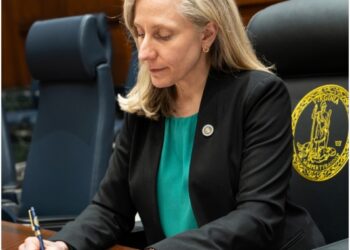
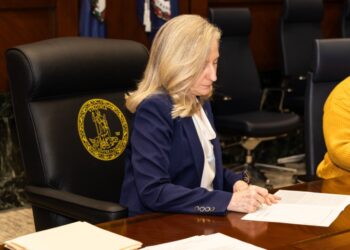
RICHMOND, VA — Governor Abigail Spanberger today signed legislation to address the high cost of housing, healthcare, and utilities across the Commonwealth.
The Governor signed bills into law to incentivize the construction of housing that Virginians can afford, work to lower Virginians’ utility costs, and set stricter emissions standards for data centers. Additionally, bipartisan bills signed into law by the Governor will protect the right to contraception, make maternal healthcare more accessible, and reduce red tape to make sure Virginians can get the care they need.
“In December, we laid out our key priorities to respond to the concerns felt by so many Virginia families about rising costs,” said Governor Abigail Spanberger. “Today, I am excited to announce that many of our proposals to make housing, healthcare, and energy more affordable are now law.”
Spanberger continued, “I am signing this legislation into law to help deliver relief for families in communities across the Commonwealth. Virginians deserve results when it comes to contending with the high cost of living — and I am deeply grateful to the lawmakers who focused relentlessly during this legislative session on contending with high costs facing families. Our work is not finished, and I look forward to continuing our efforts to make Virginia a more affordable place to live.”
Governor Spanberger signed the following bills into law to contend with high housing costs and increase housing availability:
- HB867 (Delegate Rae Cousins), SB74 (Senator Jeremy McPike) — Giving every community the opportunity to adopt an affordable housing program. Passed with bipartisan support.
- HB4 (Delegate Elizabeth Bennett-Parker) — Empowering localities to preserve and protect the long-term affordability of existing housing.
- HB352 (Delegate Josh Thomas) — Giving localities new tools to incentivize the construction of affordable housing through performance-based grant programs. Passed with bipartisan support.
- HB594 (Delegate Shelly Simonds) — Streamlining the approval process for specific affordable housing developments to help localities build more homes faster. Passed with bipartisan support.
- HB164 (Delegate Josh Thomas), SB328 (Senator Russet Perry) — Removing caps on homeownership grants so localities can better support employees seeking to live where they work. Passed with bipartisan support.
- HB806 (Delegate Betsy Carr) — Promotes safe, affordable housing by enabling more industrial development authorities to finance affordable housing. Passed with bipartisan support.
Governor Spanberger signed the following bills into law focused on making healthcare more affordable and accessible:
- HB736 (Delegate Michelle Maldonado) — Preventing costly delays in care by limiting prior authorizations. Passed unanimously.
- HB424 (Delegate Destiny LeVere Bolling), SB745 (Senator Kannan Srinivasan) — Blocking health insurers from barring in-network providers from referring patients to in-network clinical laboratories or pathology service providers. Passed unanimously.
- HB425 (Delegate Destiny LeVere Bolling) — Expanding access to telemedicine service for women experiencing high-risk pregnancies or women 35 years of age or older on Medicaid. Passed with bipartisan support.
- HB6 (Delegate Cia Price), SB596 (Senator Jennifer Carroll Foy) — Establishing the right to contraception. Passed with bipartisan support.
- HB456 (Delegate Rodney Willett), SB291 (Senator Lashrecse Aird) — Increasing the quality of care for premature or sick babies. Passed unanimously.
Governor Spanberger signed the following bills into law to address high costs of energy and other utilities:
- HB284 (Delegate Michael Feggans), SB371 (Senator Jeremy McPike) — Requiring Dominion Energy and Appalachian Power to develop voluntary demand flexibility programs for high energy demand customers. Passed with bipartisan support.
- HB507 (Delegate John McAuliff) — Setting stricter emissions standards for data center generators to reduce air pollution from the Commonwealth’s growing data center sector. Passed with bipartisan support.
- HB683 (Delegate Charniele Herring), SB659 (Senator Christie New Craig) — Creating the Solar Interconnection Grant Program to provide additional assistance for schools and city buildings looking to utilize solar projects to offset costs. Passed with bipartisan support.
- HB770 (Delegate Charniele Herring), SB650 (Senator David Marsden) — Allowing water and sewer utilities to offer discounted rates for low-income customers. Passed with bipartisan support.
- HB1360 (Delegate Irene Shin) — Requiring investor-owned utilities to provide greater transparency on coal and oil generating units in rate proceedings. Passed unanimously.
- HB1144 (Delegate Marty Martinez) — Allowing localities to reduce or waive water and sewer fees for first-time homebuyers and affordable housing developments. Passed with bipartisan support.
- HB242 (Delegate Joshua Cole) — Prohibits public utilities from increasing monthly payments more than once a year for customers enrolled in a budget plan. Passed with bipartisan support.
- HB1002 (Delegate Kathy Tran) — Prohibits some utilities from disconnecting residential customers without attempting to arrange a payment plan or connect a customer with bill payment assistance or energy savings programs. Passed with bipartisan support.
The full list of legislation signed by Governor Spanberger is available here.
BACKGROUND
Last week, Governor Spanberger signed legislation to make healthcare, housing, and energy more affordable, accessible, and reliable for Virginians. The Governor signed bills to crack down on rising prescription drug costs, increase the supply of available housing, and protect Virginia families and small businesses from increased energy costs.
In the opening months of her administration, Governor Spanberger has remained laser-focused on making life less expensive for Virginians. In December, Governor Spanberger announced the “Affordable Virginia Agenda” — her key legislative priorities with General Assembly leaders to lower housing, healthcare, and energy costs for Virginians.
On her first day in office, Governor Spanberger signed executive orders to start building a stronger, more affordable future for all Virginians — including by directing her cabinet secretaries and all executive branch agencies to quickly identify ways to reduce costs for families. Last month, the Governor signed an executive order creating Virginia’s first Chief Energy Officer — a cabinet-level position focused on addressing rising energy costs for families and meeting the Commonwealth’s long-term energy needs.