by Joanne O’Connor, Bridge2Blue
For millions of American women, mifepristone has been widely and safely used for more than two decades in the United States and across the world to medically terminate early pregnancies and manage early pregnancy loss.
In 2023—under the Biden Administration—the Food and Drug Administration (FDA) eliminated the in-person dispensing requirement for the drug mifepristone after determining it was medically unnecessary based on extensive research. This new regulation allowed mifepristone to be dispensed through telehealth services as well as in person. This change is especially important for low-income, underserved, and rural communities, which experience higher rates of birth-related mortality and morbidity and often have far more limited access to health care.
Telehealth abortion care has reduced many practical and financial barriers that make it harder to access, including childcare needs, missed work, lost income, lack of insurance coverage, and travel costs and logistics. Telehealth is also generally less expensive and can be more readily accessible than in-person care.
In October 2025, under the Trump administration, Louisiana filed a lawsuit seeking to force the FDA to reverse its 2023 regulation allowing mifepristone to be dispensed either through telehealth or in-person visits. While the FDA conducts its own review of the regulation, the U.S. District Court declined to overrule the 2023 regulation. The plaintiffs appealed and on May 1, 2026, the U.S. Court of Appeals for the Fifth Circuit overruled that decision. For the time being, mifepristone may be dispensed only in person.
The legal fight over telehealth access to mifepristone is intensifying at the state level. To protect its residents, Virginia joined nearly two dozen Democratic-led states in filing an amicus brief with the Supreme Court in May. The brief argued that the appeals court’s decision improperly put the policy choices of states that ban abortion over those of states “that have made the different but equally sovereign determinations to promote access to abortion care.”
On May 14, 2026, the Supreme Court paused the 5th Circuit’s decision, allowing mifepristone to remain available via telehealth. Fortunately, the appeals court ruling—which would have applied nationwide—was not allowed to take effect, preserving access for millions of women.
The FDA Slow Walk
As the midterms approach, Republicans are trying to keep mifepristone and the FDA out of public view. With 68 percent of U.S. adults opposing a ban on mifepristone, according to the Kaiser Family Foundation, it’s not surprising that the FDA—the named defendant in the lawsuit—kept mum and filed no brief with the justices about this case. Meanwhile, the unnecessary so-called “safety report” commissioned by HHS is not due until October, helping keep the issue out of the public eye in the lead-up to the midterms.
Virginia Ballot Measure
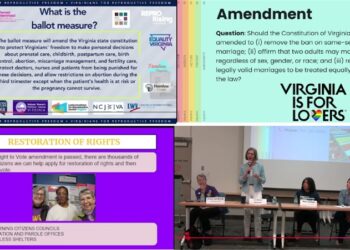
In November, Virginians will have the opportunity to vote on a ballot measure that would safeguard Virginians from future abortion bans by guaranteeing a right to reproductive freedom, including the ability to access contraception and the ability to make and carry out decisions relating to one’s own abortion care. The measure would also allow the state to regulate abortion care in the third trimester to protect the life or health of the pregnant person or in case of a fatal fetal anomaly.
Vote YES!
Reproductive healthcare is central to the fight over democracy itself. Protecting access to mifepristone means protecting the rights of millions of Americans—and defending a freedom that a majority of American support.
Let’s keep the story of mifepristone and abortion rights in the midterm spotlight.