UPDATE 6 pm – See below for a press release from Gov. Abigail Spanberger.
Governor Spanberger Highlights New Laws in Effect to Make Virginia Safer, Stronger, & More Affordable
Governor Spanberger Also Signed Laws to Expand Economic Opportunity, Support Workers, & Strengthen Schools
Spanberger: “I’m Proud of the Steps We’ve Taken Together to Lower Costs, Make Our Communities Safer, and Set Up the Next Generation of Virginians for Long-Term Success”
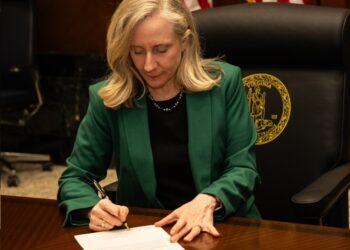
RICHMOND, VA — Governor Abigail Spanberger today, July 1, released the following statement celebrating new laws that have taken effect focused on lowering costs for families, expanding economic opportunity, and making sure every Virginia student receives a quality education that sets them up for success.
Since January, Governor Spanberger has remained laser-focused on creating a stronger, more affordable Virginia where families, workers, and small businesses can thrive. The Governor has signed new laws to deliver on four key priorities for Virginians — lowering costs, growing Virginia’s economy, investing in Virginia schools, and strengthening public safety across the Commonwealth.
“Virginians deserve a government that delivers results — and I’m proud of the steps we’ve taken together to lower costs, make our communities safer, and set up the next generation of Virginians for long-term success,” said Governor Abigail Spanberger. “Together, we’re cutting red tape to increase the supply of housing that Virginians can afford, expanding career opportunities for students across the Commonwealth, and improving protections for workers by cracking down on wage theft. I’m particularly encouraged to see my entire Affordable Virginia Agenda become law — many proposals with strong bipartisan support — as we continue to contend with economic uncertainty caused by the chaos out of Washington.”
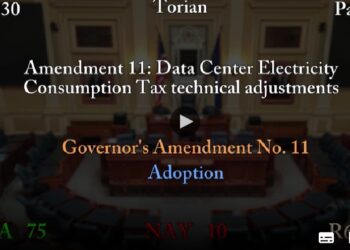
Governor Spanberger continued, “Our new budget, which takes effect today, demonstrates our ability to come together and chart a responsible path forward for the future of our Commonwealth. This budget positions Virginia as a national leader in making sure data centers pay their fair share for energy consumption, delivers record investments to strengthen public education, and dedicates hundreds of millions of dollars to lowering the cost of childcare, housing, and healthcare.”
Virginia’s biennium budget — in effect today — includes a record $2 billion in new public education funding, a first-of-its-kind energy consumption tax on data centers, and $1 billion to protect hardworking Virginians from federal cuts. The budget also includes tax relief for Virginians by increasing the standard deduction by $550 for single filers and $1,100 joint filers. The General Assembly accepted all 14 of Governor Spanberger’s amendments, including making explicit that customers of rural electric cooperatives will receive a direct RGGI credit, cancer screenings for firefighters, and earlier salary increases for home care workers.
—
Legislation Governor Spanberger signed into law that is taking effect today, July 1, includes:
MAKING VIRGINIA MORE AFFORDABLE
- HB820 (Delegate Dan Helmer), HB196 (Delegate Joshua Thomas)/ SB490 (Senator Schuyler VanValkenburg) — Investing $20 million to create a new mixed-income housing pilot to expand housing supply. Passed with bipartisan support.
- HB655 (Delegate Michelle Maldonado), SB346 (Senator Schuyler VanValkenburg) — Boosting housing supply by making it easier to build manufactured homes. Passed with bipartisan support.
- HB1191 (Delegate Irene Shin), SB377 (Senator Scott Surovell) — Permitting high energy use customers — including data centers — to invest in new energy infrastructure while protecting ratepayers from increased costs. Passed unanimously.
- HB18 (Delegate Adele McClure), SB3 (Senator Lashrecse Aird) — Lowering childcare costs by incentivizing businesses to invest in childcare for their employees. Passed with bipartisan support.
- HB507 (Delegate John McAuliff) — Requiring all future data center projects to be constructed with tier 4 or equivalent generators. Passed with bipartisan support.
- HB153 (Delegate Joshua Thomas), SB94 (Senator Danica Roem) — Requiring new data center projects to assess expected noise levels prior to approval by localities. Passed with bipartisan support.
- HB1022 (Delegate Atoosa Reaser), SB493 (Senator Stella Pekarsky) — Click-to-cancel: Allowing Virginians to cancel certain subscriptions with one click. Passed unanimously.
EXPANDING OPPORTUNITY & GROWING VIRGINIA’S ECONOMY
- HB413 (Delegate Elizabeth Guzman) — Strengthening the healthcare workforce by creating a new program to help high school students train as certified nurse aides. Passed unanimously.
- HB275 (Delegate Sam Rasoul), SB10 (Senator David Suetterlein) — Allowing more high school students to start an apprenticeship in culinary arts or information technology. Passed unanimously.
- HB332 (Delegate Sam Rasoul), SB203 (Senator David Suetterlein) — Making it easier to get career and technical education teachers into the classroom. Passed unanimously.
- HB238 (Delegate Alfonso Lopez) — Protecting employees from wage theft, ensuring that employees are able to keep their hard-earned dollars while providing clarity and guidance for employers.
- HB636 (Delegate Michelle Maldonado), SB215 (Senator Jennifer Boysko) — Prohibiting employers from seeking wage or salary history, ensuring that employees are offered the pay they deserve while promoting greater transparency in the application process.
STRENGTHENING VIRGINIA SCHOOLS
- HB253 (Delegate Jackie Glass) — Filling teacher vacancies by entering Virginia into the Interstate Teacher Mobility Compact. Passed unanimously.
- HB544 (Delegate Alex Askew), SB498 (Senator Lashrecse Aird) — Supporting new investment in K-12 schools by making the Commission on School Construction and Modernization permanent and requiring a 10-year capital roadmap. Passed unanimously.
- SB817 (Senator David Suetterlein) — Empowering parents by requiring schools to notify parents of student course enrollment deadlines and the process for requesting changes to course selection. Passed unanimously.
SECURING THE SAFETY OF VIRGINIA FAMILIES
HB19 (Delegate Adele McClure), SB160 (Senator Russet Perry) — Closing the Boyfriend Loophole to make sure convicted domestic abusers cannot exploit a legal technicality to keep their firearms.
SB673 (Senator Tammy Mulchi) — Strengthening cyberstalking laws to protect Virginians from unwanted sexual or violent contact online. Passed unanimously.
HB871 (Delegate Mark Downey), SB348 (Senator Jennifer Boysko) — Requiring safe storage of firearms to protect children and prevent theft.
From the Virginia Senate Democratic Caucus:
New Virginia Laws Take Effect July 1, Delivering Lower Costs and Creating Greater Affordability for Virginians Across the Commonwealth
RICHMOND, V.A. – Today, dozens of laws passed by the Virginia Senate Democratic Caucus during the 2026 General Assembly officially take effect, advancing the Caucus’ commitment to making Virginia more affordable and expanding opportunities for every Virginian.
The legislation taking effect reflects Senate Democrats’ continued focus on the issues that matter most to Virginia families. From helping individuals and families find and keep housing, to lowering healthcare costs, investing in public education and childcare, supporting working parents, and strengthening Virginia’s workforce, these new laws represent meaningful progress for communities across the Commonwealth.
“Today is a big day and a big win because we’re delivering for Virginians”, says members of the Virginia Senate Democratic Caucus. “These laws didn’t happen overnight. They’re the result of years of work, dedication, debate, and listening to what our constituents are asking for. This is about turning priorities into policy, and responding directly to the pressures families are feeling across the Commonwealth. Going into this year’s legislative session, we knew affordability was at the center of what people wanted to feel. That means knowing your child has a safe place to learn while you’re at work. Knowing that if you fall behind on rent, you’re not immediately pushed out of your home. Knowing that energy costs are being watched and properly overseen on your behalf. Starting today, July 1, we’re seeing the needs and priorities of the Commonwealth play out right in front of us.”
The new affordability bills passed by the Senate Democrats going into effect today include:
Expanding Affordable Housing:
Senate Bill 5 (SB 5): This bill creates a task force to figure out why low-income Virginians aren’t fully benefiting from energy efficiency and weatherization programs and to recommend ways to make those programs easier to access. Patroned by Senator Mamie E. Locke
Senate Bill 48 (SB 48): This bill gives tenants 14 days rather than 5 days to catch up on unpaid rent before a landlord can move forward with ending their lease. Patroned by Senator Aaron Rouse
Senate Bill 74 (SB 74): This bill gives every Virginia locality the option to use zoning rules to encourage the development of more affordable housing. Patroned by Jeremy McPike
Senate Bill 181 (SB 181): This bill allows local governments to offer property tax breaks to encourage developers to turn underused buildings into affordable housing. Patroned by Senator Angelia Williams Graves
Senate Bill 328 (SB 328): This bill gives local governments more flexibility to help public employees afford to live in the communities they serve. Patroned by Senator Russet Perry
Improving Access to Healthcare:
Senate Bill 73 (SB 73): This bill requires the Department of Medical Assistance Services (DMAS) to train school division staff on how to properly use Medicaid billing so schools can get reimbursed for eligible health services they already provide to students. Patroned by Senator Kannan Srinivasan
Senate Bill 161 (SB 161): This bill puts a cap on how much people have to pay out-of-pocket for prescription drugs each month under certain health insurance plans. Patroned by Russet Perry
Senate Bill 257 (SB 257): This bill requires health insurance plans in Virginia to fully cover at least one opioid overdose reversal drug and make it easy to access. Patroned by Senator Barbara Favola
Senate Bill 361 (SB 361): This bill requires health insurance plans that cover prescription drugs to also cover FDA-approved birth control, including over-the-counter contraceptives, with little to no out-of-pocket cost for most patients. Patroned by Senator Jennifer Carroll Foy
Senate Bill 398 (SB 398): This bill updates and expands Virginia’s program that supports families whose infants suffer serious brain or neurological injuries during birth. It makes several administrative changes to how the program operates and significantly increases financial support for affected families. Patroned by Senator Russet Perry
Supporting Job Growth and Workforce Development:
Senate Bill 2 (SB 2): This creates a statewide paid family and medical leave insurance program so workers can take time off for major life or health needs and still receive part of their paycheck. Patroned by Senator Jennifer Boysko
Senate Bill 215 (SB 215): This bill changes how employers can handle pay information during hiring and job postings. It is designed to make pay more transparent and reduce pay inequality. Patroned by Senator Jennifer Boysko
Senate Bill 301 (SB 301): This bill protects a small amount of money in people’s bank accounts from being taken through garnishment. It also protects certain recent government benefits that were directly deposited into an account. Patroned by Senator Schuyler VanValkenburg
Helping Working Parents Access High Quality Childcare:
Senate Bill 3 (SB 3): This bill creates a new program to help make child care more affordable by encouraging employers to contribute toward their employees’ child care costs, with the state matching some of those contributions. Patroned by Senator Lashresce Aird
Strengthening Utility and Energy Affordability:
Senate Bill 43 (SB 43): This bill tells the Virginia Department of Energy to study how demand response programs are working, and then report back with recommendations. Patroned by Senator Danica Roem
Senate Bill 72 (SB 72): This bill pushes Virginia’s major electric utilities to expand energy efficiency upgrades for low-income households and report regularly on their progress. Patroned by Senator Kannan Srinivasan
Senate Bill 175 (SB 175): This bill updates Virginia’s rules for how electric utilities must meet renewable energy goals under the state’s Renewable Portfolio Standard (RPS) program. It mainly focuses on where renewable energy comes from and how easily smaller projects can participate. Patroned by Senator Schuyler VanValkenburg
Senate Bill 249 (SB 249): This bill changes how electric utilities in Virginia plan for the state’s future energy needs. Utilities must regularly submit long-term plans (called Integrated Resource Plans or IRPs) that show how they will meet electricity demand over time. Patroned by Senator Scott Surovell
The Virginia Senate Democratic Caucus remains committed to putting Virginia families first by lowering costs, expanding opportunity, and building a Commonwealth where everyone has the freedom to succeed. Today’s laws reflect that commitment and continue the Caucus’ work to make Virginia the best place to live, work, and raise a family.