| Getting your Trinity Audio player ready... |
By: Marsh McJunkin, former FDIC staff; Karen Kinard, contributor
The Trump administration appears to be taking the same approach to financial oversight that it took toward COVID-19 in his first term: “If we stop testing right now, we’d have very few cases, if any.” In other words, if you stop looking for danger, you can pretend it isn’t there. But pretending it doesn’t exist doesn’t make it less real – and for Virginians, that risk is real.
That logic now seems to be guiding the administration’s treatment of the Office of Financial Research (OFR), a Treasury Department office created by Congress after the 2008 financial crisis as part of the Dodd-Frank Act to improve financial accountability and transparency. OFR’s job is straightforward: collect data, analyze threats, and warn the Financial Stability Oversight Council when the system is vulnerable.
This is no sleepy moment in the financial markets. War disruptions, tariff shocks, unstable crypto policy, shadow-banking growth, merger waves, corporate-reporting rollbacks and questions about insider advantage are all sending tremors through the financial system that affect investments, retirement accounts, and borrowing costs for Virginians.
JPMorgan Chase CEO Jamie Dimon recently used his old “two roaches” analogy: when you see one failure, more are likely hiding in the walls—his warning that risks in the $1.8 trillion private credit market may be far larger than they appear.
Ordinary Virginians who rely on pensions and investments for financial security face deeper vulnerabilities today than before the 2008 housing collapse. Insurance companies and pension funds increasingly channel workers’ savings into the fast-growing private-credit market, shifting risks once confined to Wall Street onto ordinary households.
That is precisely why stronger monitoring is needed—not less.
Yet the Trump administration has ordered a 64% staffing cut at OFR, reducing some teams to just a handful of people. When congressional Republicans tried to eliminate the office altogether through their budget bill, more than 50 macro-financial experts—including former Federal Reserve chairs, former Treasury officials and leading scholars—warned against it. Financial crises, they noted, impose enormous social and economic costs, and today’s uncertainties make this the worst possible time to gut a systemic-risk watchdog.
Sen. Elizabeth Warren put it bluntly: “This is just the latest move by President Trump and his financial regulators to undermine financial stability and pave the way for another crash.”
She’s right.
I’ve seen firsthand what happens when regulators lack the tools or authority to identify risk. In the 1980s, I worked for the Federal Home Loan Bank Board during the savings-and-loan collapse. Later, at the FDIC, I watched banks fail again during the 2008 financial crisis. Between 2008 and 2012, the FDIC closed 465 failed banks; in the five years before that, only 10 failed. Two Virginia institutions were among the casualties.
The toll on ordinary Americans was staggering. Millions lost their homes. Millions more fell underwater on their mortgages. The economy shed 8.7 million jobs between 2008 and 2010. In Virginia alone, more than 180,000 jobs disappeared, and entire regions struggled for years.
The lesson is not complicated: when oversight weakens, crises grow larger, costlier, and longer-lasting.
And OFR is not a bloated taxpayer burden. It is funded by assessments on the largest bank holding companies and designated nonbank firms. Cutting it does nothing to reduce the federal deficit. It only reduces oversight of the institutions whose failures can devastate the economy.
The administration is also reportedly restricting OFR’s ability to publish data and analysis. So even when risks are identified, the public may never hear about them. As one OFR employee told Government Executive, the administration does not want an early-warning system “pointing out” those risks.
That should alarm everyone in Virginia.
Weakening OFR did not come out of nowhere. It fits neatly into the broader deregulatory agenda laid out in Project 2025, which calls for rolling back post-2008 safeguards and shrinking the agencies designed to monitor systemic risk.
Why don’t lawmakers lifting financial oversight learn from the past? Nobel Prize-winning economist Paul Krugman reminds us of Sinclair Lewis’ principle: “It is difficult to get a man to understand something when his salary depends on his not understanding it.”
Since Citizens United, campaign donations have surged far beyond pre-2008 levels. More than ever, political donors are seeing a strong return on their deregulation investments. Enticements of personal financial gain are also a factor. Banking—and especially shadow-banking—interests “are very good at creating bright, shiny objects,” Krugman noted.
We have been here before. We know what happens when regulators are blinded, warning systems dismissed, and financial players left to invent ever more “bright, shiny objects” outside meaningful scrutiny —transferring incredible and often undisclosed financial risk to the average investor.
The country does not need less visibility into financial risk. It needs more accountability—and more transparency.
Private credit and other big players may get hit first in the next crisis, but it won’t stay on Wall Street for long – the brunt will land on Virginia’s workers, homeowners, retirees, and small businesses.
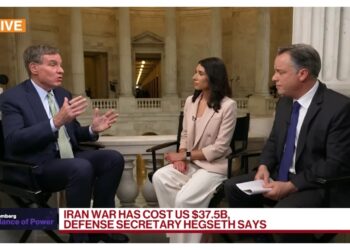
By the way, Virginia Senator Mark Warner is a senior member of the U.S. Senate Committee on Banking, Housing, and Urban Affairs and is an advocate for consumer protection. This is an opportunity to let him know that you are concerned about the cuts and regulatory changes at the FDIC and how they could negatively impact Virginians and their financial wellbeing.