| Getting your Trinity Audio player ready... |
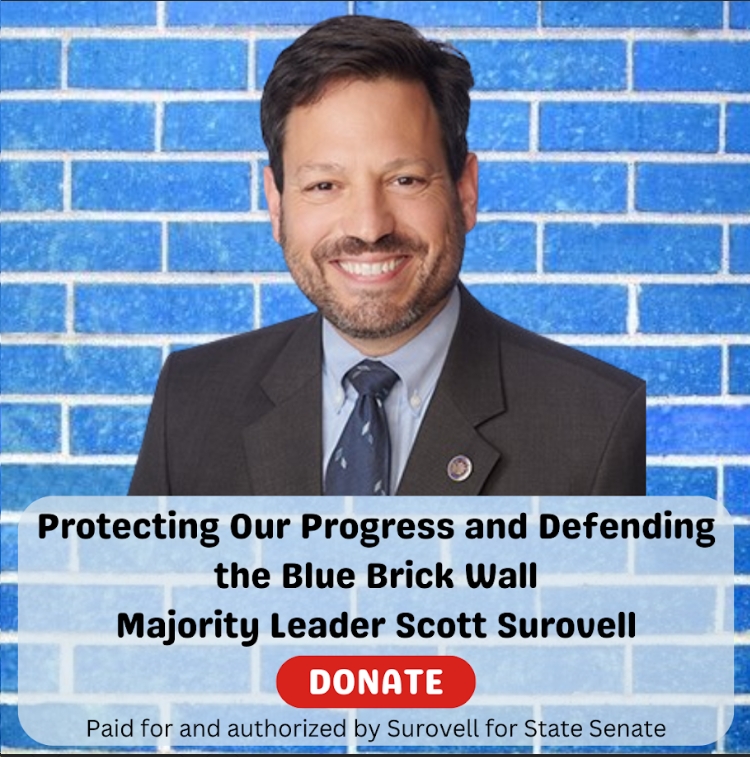
See here and below for the emergency application to the U.S. Supreme Court by “Don Scott, in his official capacity as Speaker of the Virginia House of Delegates; Scott Surovell, in his official capacity as Majority Leader of the Virginia Senate; L. Louise Lucas, in her official capacity as President Pro Tempore of the Virginia Senate; and the Commonwealth of Virginia.” Here are highlights from their argument:
- “This Court is Likely to Grant Review and Reverse”
- “The Supreme Court of Virginia’s Decision Was Predicated on a Grave Misunderstanding of Federal Law”
- “The Supreme Court of Virginia’s Decision Transgressed the Ordinary Bounds of Judicial Review”
- “Applicants, Candidates, and Voters Would be Irreparably Harmed Absent a Stay and the Equities Weigh in Favor of Permitting the Commonwealth to Hold Elections Using the Maps Authorized By the Constitutional Amendment”
- “Based on that novel and manifestly atextual interpretation, the Court overrode the will of the people who ratified the amendment by ordering the Commonwealth to conduct its election with the congressional districts that the people rejected.”
- “A stay is warranted because the decision by the Supreme Court of Virginia is deeply mistaken on two critical issues of federal law with profound practical importance to the Nation. The decision below violates federal law in two separate ways. First, it predicated its interpretation of the Virginia Constitution on a grave misreading of federal law, which expressly fixes a single day for the “election” of Representatives and Delegates to Congress…Second, by rejecting the plain text of the Virginia Constitution’s definition of the term “election” to adopt its own contrary meaning, the Supreme Court of Virginia ‘transgressed the ordinary bounds of judicial review such that it arrogated to itself the power vested in the state legislature to regulate federal elections.'”
- “The irreparable harm resulting from the Supreme Court of Virginia’s decision is profound and immediate. By forcing the Commonwealth to conduct its congressional elections using districts different from those adopted by the General Assembly pursuant to a constitutional amendment the people just ratified, the Supreme Court of Virginia has deprived voters, candidates, and the Commonwealth of their right to the lawfully enacted congressional districts.”
- “The Virginia Supreme Court blatantly misreads the federal circuit cases upholding early voting in a way that, as the dissent explained, would render early voting unlawful.”
- “This settled understanding of federal election law is common ground in Watson v. Republican National Committee, which is currently pending before this Court. The issue in that case is whether the federal Election Day statutes require that all mailin ballots be received by the end of Election Day”
- “This is the rare case in which a state court’s decision so dramatically departed from the text of the state constitution that it satisfied this exacting standard…The text of the Virginia Constitution establishes that a ‘general election’ is the legally operative event on a particular day on which a result is determined—not the entire period during which ballots may be cast during early voting. The Constitution uses the phrase “election” across multiple provisions…This provision unmistakably indicates that, as a matter of ordinary English usage, the “general election” takes place in ‘November,’ not over a three-month period beginning in September.”
- “Constitutional history demonstrates an unchanging text that confirms this interpretation. The Virginia Constitution has set elections to take place on a single day for more than 150 years, long before the General Assembly established early absentee voting…Virginia’s statutes governing elections—including the version enacted by the first General Assembly sitting under the 1971 Constitution—further corroborate this interpretation. “
- “In summary, the text of the Virginia Constitution—along with the contemporaneous understandings of both the legislative and executive branches at the time of the Constitution’s ratification—unquestionably refute the Virginia Supreme Court’s interpretation. All that remains is the Virginia Supreme Court’s policy-driven preferences…”
- “The Supreme Court of Virginia thus defied the combined sovereignty of the people of the Commonwealth who ratified the 1971 Constitution that governs the process for amendment, two General Assemblies who passed the amendment, and the people who ratified the amendment in 2026. By so dramatically departing from the text and structure of the Virginia Constitution, the Virginia Supreme Court’s decision thus impermissibly transgressed the ordinary bounds of judicial review.”
- “The window for orderly administration of Virginia’s congressional elections is closing rapidly. This Court should act now to preserve the status quo while it considers the grave federal questions the decision below raises.”