| Getting your Trinity Audio player ready... |
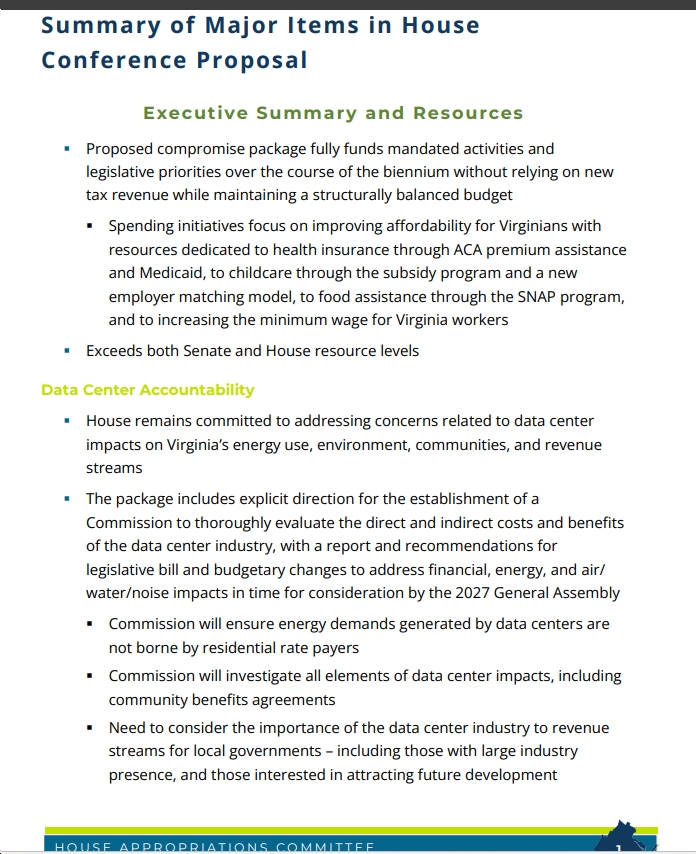
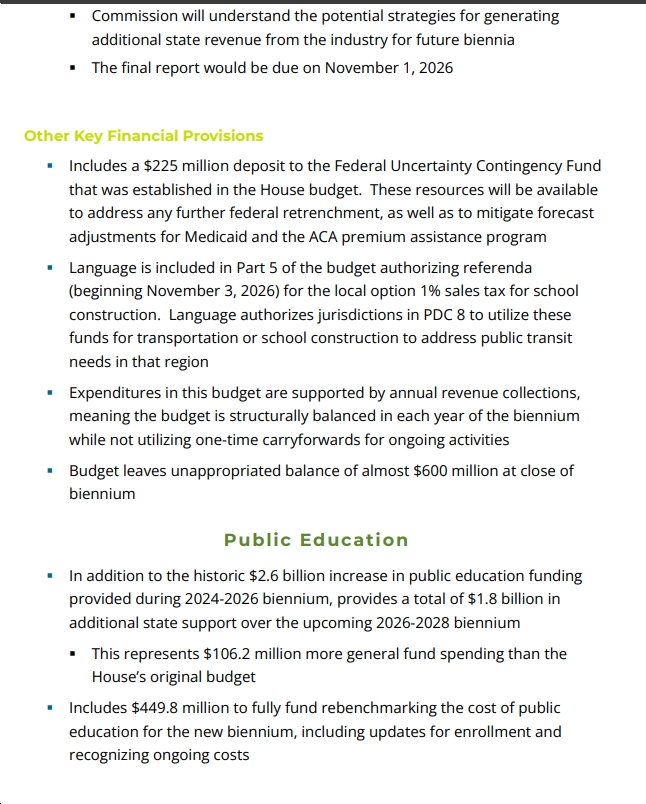
With an end-of-June deadline to reach a budget deal, and with the “sides” (in this case, apparently the State Senate vs. the House of Delegates and Gov. Abigail Spanberger) still not having agreed on how to handle the big issue of tax breaks for data centers, this morning the Virginia House Appropriations Committee announced its budget conference proposal. See below for screenshots of the first couple pages, including:
- “Proposed compromise package fully funds mandated activities and legislative priorities over the course of the biennium without relying on new tax revenue while maintaining a structurally balanced budget”
- “Spending initiatives focus on improving affordability for Virginians with resources dedicated to health insurance through ACA premium assistance and Medicaid, to childcare through the subsidy program and a new employer matching model, to food assistance through the SNAP program, and to increasing the minimum wage for Virginia workers”
- “House remains committed to addressing concerns related to data center impacts on Virginia’s energy use, environment, communities, and revenue streams”
- “The package includes explicit direction for the establishment of a Commission to thoroughly evaluate the direct and indirect costs and benefits of the data center industry, with a report and recommendations for legislative bill and budgetary changes to address financial, energy, and air/ water/noise impacts in time for consideration by the 2027 General Assembly”
- “Commission will ensure energy demands generated by data centers are not borne by residential rate payers; Commission will investigate all elements of data center impacts, including community benefits agreements; Need to consider the importance of the data center industry to revenue streams for local governments – including those with large industry presence, and those interested in attracting future development; Commission will understand the potential strategies for generating additional state revenue from the industry for future biennia; The final report would be due on November 1, 2026.”
- “In addition to the historic $2.6 billion increase in public education funding provided during 2024-2026 biennium, provides a total of $1.8 billion in additional state support over the upcoming 2026-2028 biennium”
- “Increases general fund support for the childcare subsidy program by $137.6 million, for a total of $577 million over the biennium. “
- “This compromise budget would provide $346.1 million in increased biennial funding for higher education over the 2026 base budget”
- “Our budget invests an additional $76.5 million over the biennium to help Virginians facing housing insecurity and increase the supply of affordable housing in the Commonwealth “
- “The budget includes multiple initiatives to improve the lives of working Virginians, including increasing the minimum wage, requiring
employers to offer paid sick leave to employees, and supporting the development of a paid family and medical leave program “ - “Across the Secretarial area, this compromise proposal provides more funding than either the House or Senate budgets. In total, the package reflects increases of $3.1 billion in health and human services”
- “This amendment provides $865,000 each year from the general fund and four positions to support workload increases for the VDACS Office of Weights and Measures related to the establishment of an adult-use recreational cannabis market.” (Great work by State Senator Lashrecse Aird and Del. Paul Krizek on this issue, BTW!)
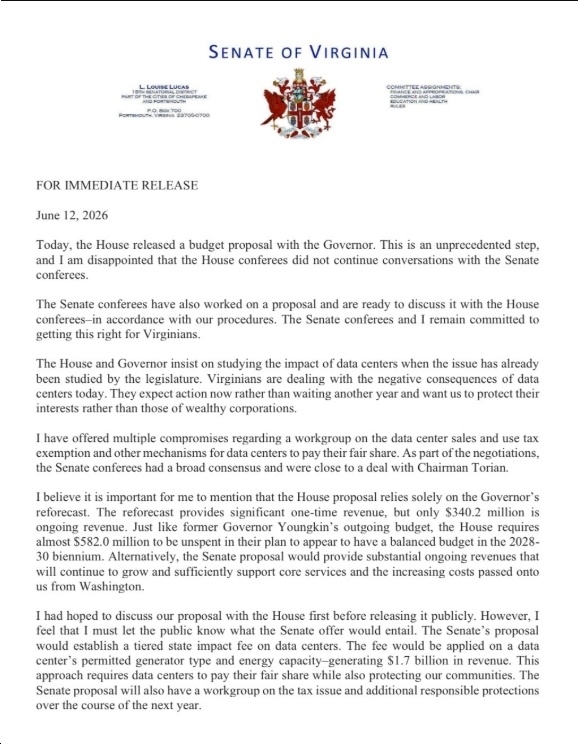
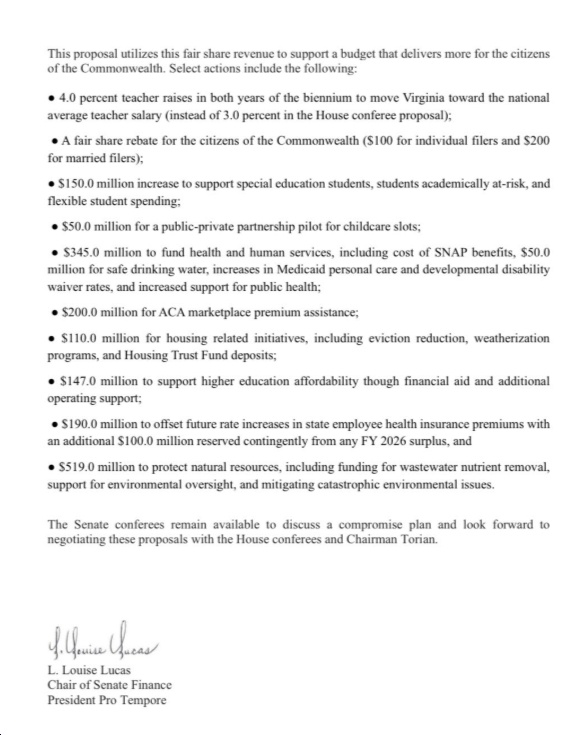
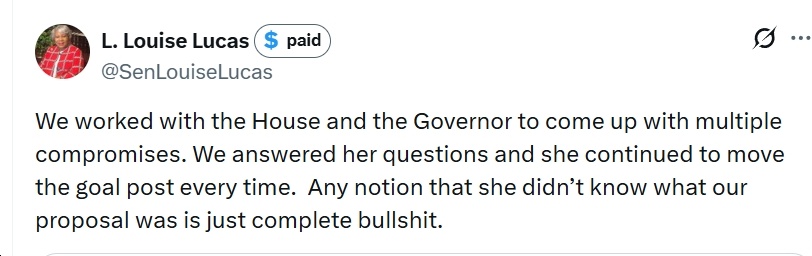
So, obviously, this proposal does not get rid of data center tax breaks, but instead proposes a commission to look at them. We’ll see what the State Senate, particularly Finance/Appropriations Chair Louise Lucas, thinks about this…
UPDATES 11:40 am from journalist Tyler Englander:
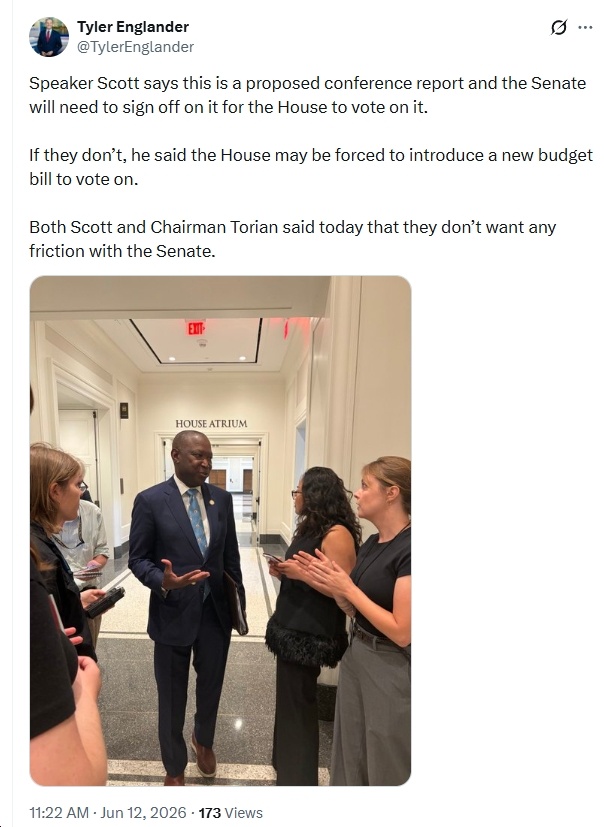
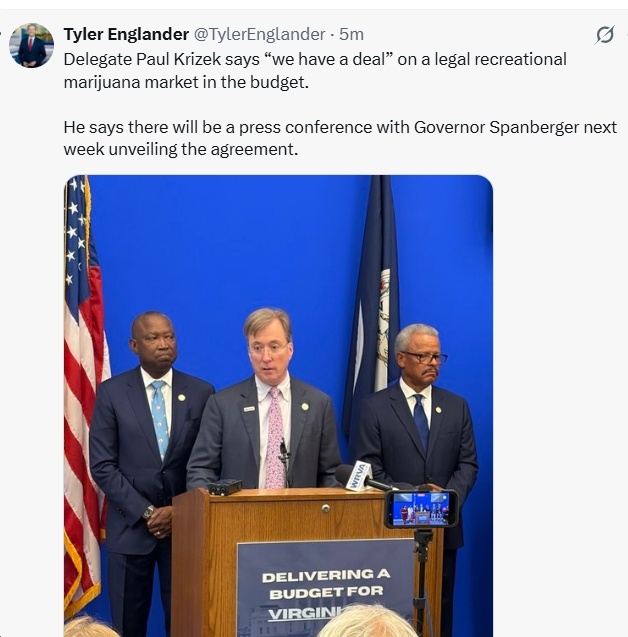
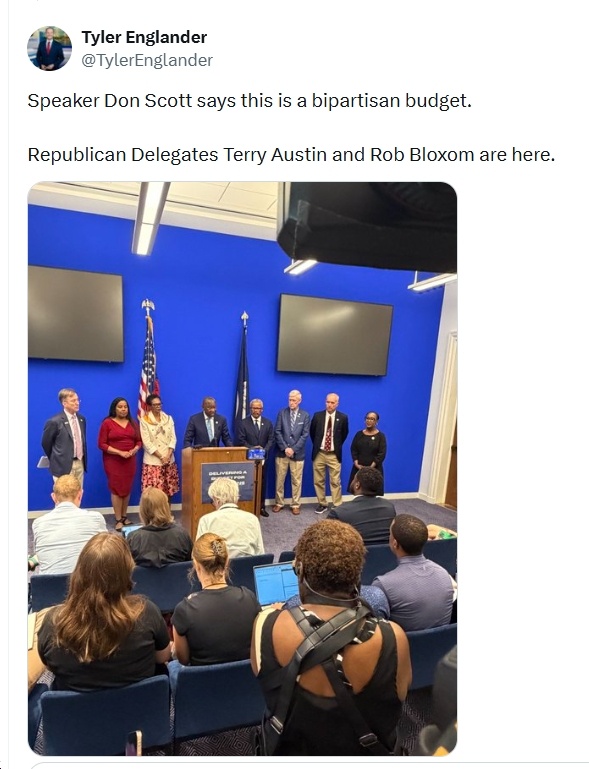
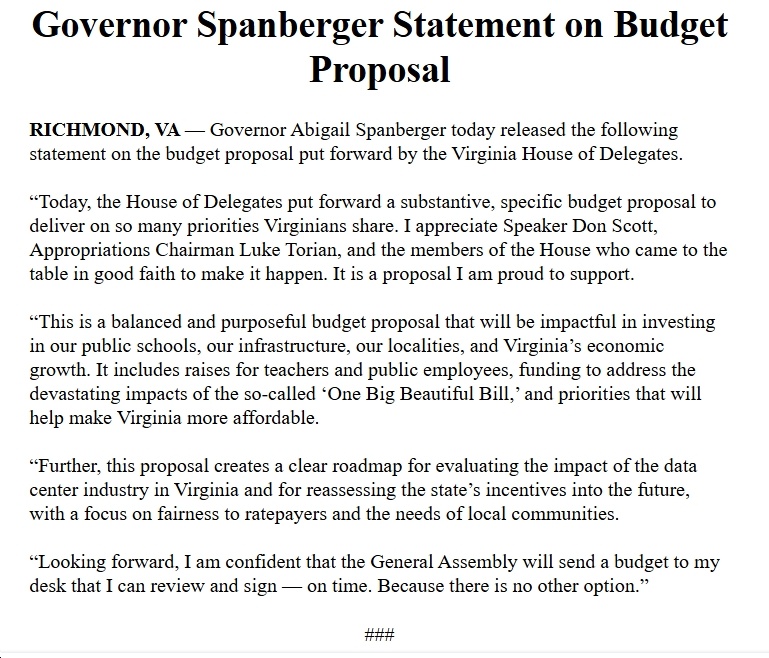
VA House Finance Chair Vivian Watts on the Politics Hour earlier this afternoon:
“…that’s precisely why the House has been working so hard trying to look at everything that the Senate has proposed integrated into this proposed compromise to move as quickly as we can towards the adoption. It is a significantly bigger budget than what the House originally passed, $2 billion more because of revenue projections as well as looking at some of the issues that were raised by the Senate. It definitely deals with increased funding for K-12. Absolutely gets into the constant issues that we’re facing with the federal administration regarding healthcare cuts and SNAP cuts all of those important benefits. But then as far as data centers…
…Let’s let’s make sure that we understand the total proposal being made that uh released this morning and will meet on the 18th to adopt this is to suspend all changes in data center taxation until we immediately have a full study commission that will report in time for action in January… It is much too simplistic to say that the only aspect that we have to deal with is the tax situation. 38 states have similar tax credits or tax exemptions. So, we’re right in the pack with the rest of the states. If we suddenly change and go with the other 12, we’ve got serious problems in how we handle this. Having said that, Virginia has over a quarter, I believe it’s 27% of all of the data centers in the United States…and more on the books. And so we’re far ahead of other states that are rolling, rolling, rolling to get their quote unquote share with however I’ll be talking about all the concerns that go with putting in a data center…
On the House side, we separate, I’m tax committee finance chair and we have the appropriations chair. So when we look at the full tax considerations just doing away with an incentive that was 15, 17 years ago that was originally to bring in data centers. Our problem now obviously is not bringing in data centers. The incentive should be because our number one problem is energy usage. We for a decade Virginia along with the rest of the country basically energy needs have been plateaued…but now we’re looking at a tenfold increase in energy coming out of data centers. So number one in the House package, number one of this commission is to ensure that the energy demands generated by data centers will not be borne by residential units. That’s number one…So this why the complexity of how you do that. With my with my personal tax hat on, when I incentivize I want to make sure that my tax is connected with that. So am I going to say you only get the exemption if it’s significantly more energy efficient? That’s what I want you to do. Do I instead increase our utility tax on data centers, which is already higher than residential? Or should it be higher yet? What do I do as far as making sure directly that these data centers pay for all of the generation they’re asking for as well as transmitting that to their site? All of those things are part of what need to be addressed, not just simply whether we don’t have exemption.
…Well, first of all, there was a phasing out anyway. So we’re giving ourselves a time to make sure that in the next 6 months what we want to unfold in all these complexities so we don’t end up with the simplistic approach that we had 15 years ago which is just that you exempt purchase of equipment…We’re talking about five months. The reports will come out in November at the next legislative session. That’s right.”
Speaker Don Scott: “The question is not how we got here. The question is how we fix it, but fix it responsibly in a non-disruptive way. And the answer is not to blow up Virginia’s families with a budget fight. They’re counting on us. We’re proposing the first in the nation data center data center accountability commission. Full investigation into energy costs, financial impacts, air quality, water conservation, renewable energy, and community impacts with a report due November 1st, 2026. So the 2027 general assembly can pass real last lasting reform. Or if the governor would like, we can come back right after that report is out in November and come back for special session. That that’s an option that we have. We get to look under the hood, see what’s going on in a responsible, thoughtful, soberminded way. Build a real framework and then execute. That’s what we want from our data centers. That’s what we want from our citizens. And we want real accountability. Virginia families cannot wait. And we will not make them wait.”